Ceiling Paint Colour: Finishes, Shades and Rules That Work in Real Rooms
Choosing a ceiling paint colour sounds simple until you see two whites side by side. The finish, the light in the room and the wall colour all change how a ceiling looks, and a poor choice makes a room feel lower and darker. This guide explains the finishes, the shades that work, when a coloured or dark ceiling is a good idea and how to prepare the surface. For pairing with wall colours, go to ceiling and wall colour combination.
Matt, satin or gloss: the finish comes first
Most ceilings are painted in matt emulsion, because a flat finish hides small bumps, joints and roller marks, and does not create glare under downlights, which matters most in rooms with recessed lights. A slight sheen is used in kitchens and bathrooms, where it wipes clean more easily. Gloss on a ceiling is rare, because it reflects every flaw and light fitting.
| Finish | Look | Best for | Watch for |
|---|---|---|---|
| Matt | Flat, soft | Living rooms, bedrooms, most ceilings | Marks are harder to wipe |
| Soft sheen or satin | Slightly glossy, easy to clean | Kitchens, bathrooms, corridors | Shows joints and bumps |
| Gloss | Mirror-like | Special feature panels only | Reflects every flaw |
White and off-white: the dependable choice
White reflects the most light, makes a room feel taller and works with every wall colour. The difference is in the tone. A pure bright white suits modern rooms with grey or cool walls, while a warm off-white suits rooms with cream walls, wood and brass.
Test a sample on a patch of the ceiling and look at it in morning and evening light before painting the whole room.
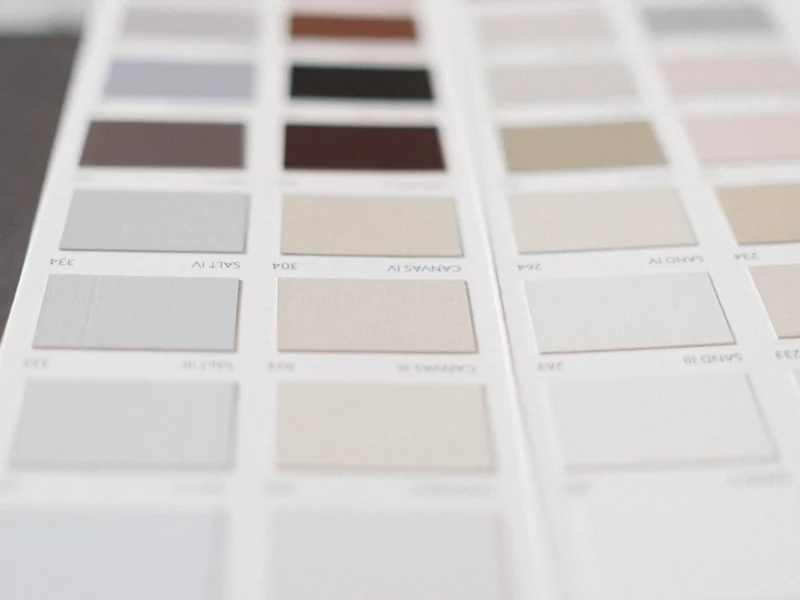
Tinted and coloured ceilings
A very pale tint of the wall colour looks tailored and softens the corner between wall and ceiling. Pale blue, soft grey and warm cream are common in bedrooms. A stronger colour works best in a limited area: a cove, a border or a single recessed panel. A coloured ceiling lowers the room visually, so keep it for tall spaces.
When a dark ceiling works
A dark ceiling in charcoal, navy or deep green can look dramatic in a large, well-lit room with strong artificial light. In a small or low room it feels heavy. If you try it, use matt paint, light the room well and keep the walls lighter, so the room does not feel like a box.
Preparing the ceiling before you paint
- Fix the cause of any stain first, such as a leak or condensation.
- Fill and sand joints, cracks and screw heads.
- Seal stains with a stain-blocking primer.
- Prime the surface so the paint dries evenly.
- Apply two thin coats of paint, cutting in the edges first and rolling in one direction.
New gypsum and POP surfaces must be fully dry and primed before painting. Repair tips are in the false ceiling repair guide.
Colour in the cove and borders
A coloured cove or a darker border can add character without darkening the whole room. A warm LED strip behind a pale ceiling gives a soft glow, and a tinted cove can reflect a hint of colour. Keep the strip temperature consistent with the room. More ideas are in false ceiling lighting ideas.
Common ceiling paint mistakes
The most common mistake is choosing from a small chip: paint always looks lighter on a chip than on a large ceiling, and the ceiling is lit from the side. Other mistakes are painting over a stain without sealing it, skipping the primer on new gypsum, using one thick coat instead of two thin ones, and choosing a sheen that shows every joint. Test a large patch first.

Ceiling paint by room
- Living room: warm or bright white, matt.
- Bedroom: soft white or a pale tint, matt.
- Kitchen: white with a soft sheen or washable matt, moisture resistant.
- Bathroom: mould-resistant paint on a sealed, dry surface, or PVC panels.
- Entrance and corridor: white or a soft tint to make the space feel longer.
Ceiling Paint Colour: Frequently Asked Questions
White or a warm off-white is the best all-round colour. It reflects the most light, makes the room feel taller and works with every wall colour. Choose a bright white for modern cool schemes and a warm white for rooms with cream walls and wood.
Matt is the usual choice because it hides small bumps and joints and avoids glare under downlights, especially in rooms with several recessed lights. A soft sheen helps in kitchens and bathrooms, where it wipes clean more easily. Gloss is only suitable for small feature panels.
Yes, in a large, well-lit room with tall ceilings. A dark ceiling looks dramatic but makes a small or low room feel heavy. Use matt paint, keep the walls lighter and light the room well so it does not feel enclosed.
Fix the cause first, usually damp or a leak, then sand, fill and prime before painting. Paint on a dirty, damp or unprimed surface will peel. New gypsum and POP surfaces need to dry fully and be primed with a suitable primer before the first coat.
A white or very pale ceiling a shade lighter than the walls makes the room feel taller, especially with a thin cove light that washes the ceiling. Avoid dark or strongly coloured ceilings in low rooms, because they visually lower the room.
Yes, on new surfaces, repaired areas and stained patches. A primer seals the surface so the paint dries evenly, and a stain-blocking primer stops old marks from showing through. Without it, you may need extra coats and still see patches.
A mould-resistant, moisture-resistant paint on a sealed, dry surface, with an exhaust fan to control steam. Soft-sheen finishes clean more easily. For bathrooms with constant steam and poor ventilation, PVC ceiling panels are often a more durable choice than paint over the long term.
Yes. A warm white strip suits warm white ceilings, and a neutral white strip suits a cool white ceiling. Keep the strip colour consistent across the room, and check how the light looks against the paint before the cove is closed up, because it is hard to change afterwards.
More Ceiling Pages
Planning a ceiling finish?
Send a photo and the room size. We suggest a finish and quote it.