Bathroom Ceiling Design: Waterproof Materials, Ventilation and Lighting
A bathroom is the wettest room in the house, and bathroom ceiling design is mostly about moisture control. The wrong ceiling stains, sags and grows mould within a season, while the right one stays clean for years. This guide explains the materials that suit a bathroom, why ventilation matters as much as material, how to light the room safely and where to put an access hatch. It sits within our guide to false ceiling designs.
Why bathroom ceilings fail
Hot showers fill the air with steam, which condenses on the cold ceiling. Porous materials absorb it, paint peels, boards soften and mould grows. Poor ventilation makes it worse. A good bathroom ceiling combines a non-absorbent material, a sealed finish and a way to remove the moisture.
Materials that suit a bathroom
These are the safe choices.
| Material | Why it works | Watch for |
|---|---|---|
| PVC panels | Waterproof, rot-proof, wipe-clean | Keep clear of hot surfaces |
| WPC panels | Moisture-resistant, sturdy | Heavier, a little more cost |
| Aluminium panels or tiles | Fully waterproof, durable | Higher cost |
| Moisture-resistant board with mould-resistant paint | Smooth, paintable | Needs ventilation; not for constant steam |
Avoid POP, standard gypsum and MDF in a bathroom. PVC patterns are shown in PVC ceiling design.
Ventilation matters as much as material
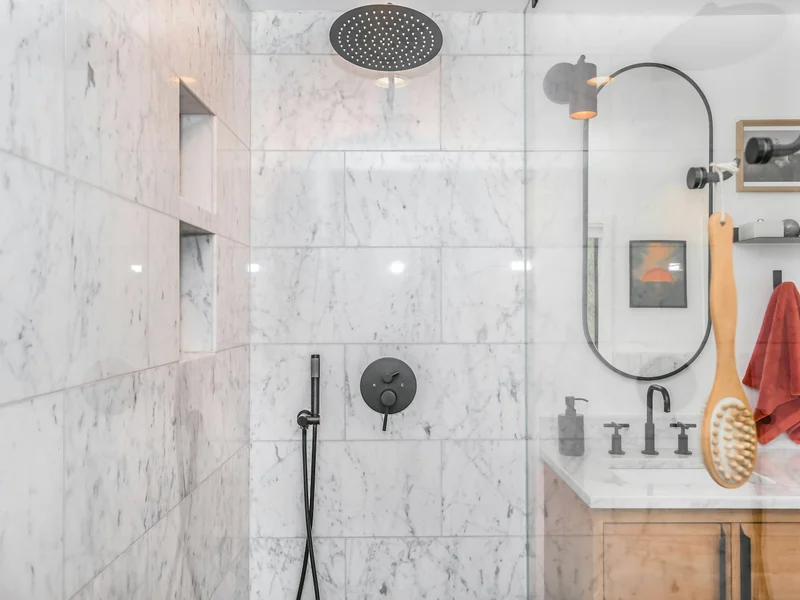
An exhaust fan that vents to the outside takes steam out before it condenses. Size and position the fan near the shower, run the duct to a safe outlet, and leave an opening in the ceiling for it. Use a window if there is one. Without ventilation, even a waterproof ceiling collects condensation and a musty smell.
Lighting a bathroom ceiling safely
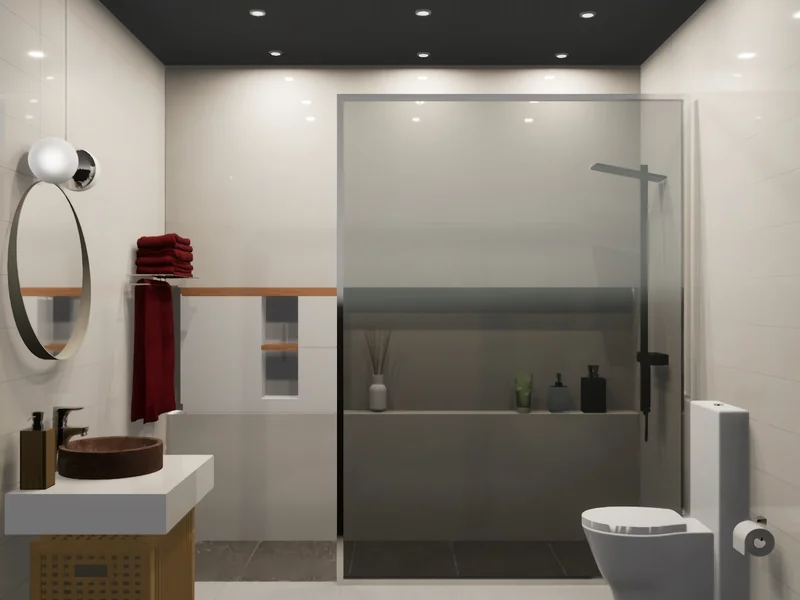
Use light fittings made for bathrooms and rated for moisture, and have the wiring done by a qualified electrician. Small recessed LED downlights give clean, even light, and a mirror light adds task light at the basin. Keep the colour neutral to warm white, and keep fittings clear of the direct shower spray.
Plan an access hatch
Water pipes, geyser connections and wiring often run above a bathroom. Put an access hatch where you can reach the valves and joints, so a leak does not mean breaking the ceiling. Finish the hatch edge neatly so it looks designed, not added later.
Colour and cleaning
White or a pale tone makes a small bathroom feel larger and shows when it needs cleaning. Wipe PVC, WPC and aluminium with a damp cloth and mild soap, and wipe condensation off in the morning during the humid months. If you use a painted board, choose a mould-resistant, washable paint and keep the room ventilated.
Cost factors
PVC is the most economical bathroom ceiling. WPC and aluminium cost more. Published rates are on the ceiling hub. For the kitchen equivalent, see kitchen ceiling design. We give written quotes after seeing the room.
Bathroom Ceiling Design: Frequently Asked Questions
PVC panels are the best all-round choice because they are waterproof, rot-proof, quick to fit and economical. WPC and aluminium panels cost more and last longer in constant steam. Combine any of them with an exhaust fan to remove moisture.
Only a moisture-resistant grade with a mould-resistant paint, good ventilation and a sealed finish, and not in a bathroom with constant steam. Standard gypsum softens, stains and can sag within a season or two. For most bathrooms, PVC, WPC or aluminium is safer and lasts much longer.
Yes. Steam must leave the room, or it condenses on the ceiling and walls. A fan venting outside, positioned near the shower, protects the ceiling and the paint, and prevents mould and a musty smell. Leave an opening for it in the ceiling.
Use fittings rated for bathrooms and moisture, installed by a qualified electrician. Sealed recessed LED downlights are common, with a mirror light for the basin. Keep fittings clear of direct shower spray and avoid ordinary indoor fittings in wet zones.
Yes, wherever pipes, valves or geyser connections run above. A hatch lets you inspect and repair without breaking the ceiling. Place it where you can reach the joints, and finish its edge neatly so it looks like part of the design.
Send the bathroom size, a photo and the material you prefer on WhatsApp. We reply with a written rate showing the panels, the frame, the lights and the labour, so you can compare quotes from different contractors on the same scope and finish.
Planning a bathroom ceiling?
Send the bathroom size and a photo. We suggest a material and quote it.