Ceiling Tiles and Panels: Types, Sizes and Where Each One Belongs
Ceiling tiles are the practical way to finish a ceiling: they are made in standard sizes, hung on a light grid, lift out for access to wiring and cost less than a custom plastered ceiling. This guide compares the main types of ceiling tiles and panels, explains the standard sizes and grid, and shows which belongs in an office, a shop, a kitchen or a bathroom. For the board materials behind them, see ceiling boards.
The main types of ceiling tiles and panels
Five types cover most projects. They differ in material, weight, moisture resistance and look.
| Type | Look | Best for | Limit |
|---|---|---|---|
| PVC panels | Clean strips, many prints | Kitchens, bathrooms, bedrooms | Fewer sculpted shapes |
| Gypsum tiles | Smooth white, sometimes patterned | Offices, shops, corridors | Damaged by leaks |
| Mineral fibre tiles | Soft, textured, acoustic | Offices, classrooms, meeting rooms | Not for damp rooms |
| Metal tiles | Aluminium, clean and durable | Commercial kitchens, hospitals, malls | Higher cost |
| Acoustic panels | Textured or felt-faced | Cinemas, studios, call centres | Specialist |
For the PVC range, see PVC ceiling panels and the designs in PVC ceiling design.
Standard sizes and the ceiling grid
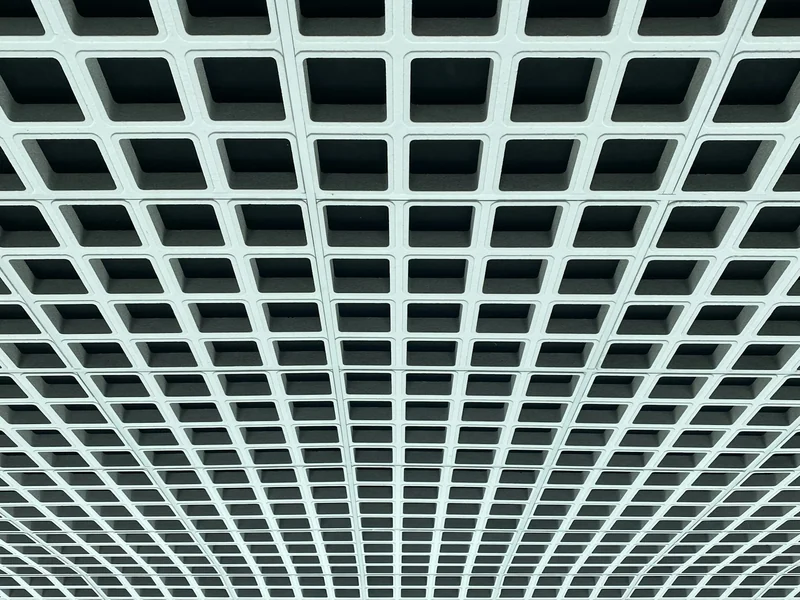
Lay-in tiles are made for a metal T-grid. The common module is 600 x 600 mm (about 2 x 2 ft), with 600 x 1200 mm (2 x 4 ft) also used in offices. The grid is hung from the slab on wire hangers, and the tiles drop into the openings, so a single tile can be lifted for access.
PVC ceiling panels work differently. They are long strips, commonly around 8 to 10 inches wide, that clip or slide together and are fixed to a light frame or battens.
Which tile for which room
Match the tile to the demands of the room first.
- Offices and shops: lay-in gypsum or mineral fibre tiles on a grid, with flat LED panels. See office ceiling design.
- Kitchens and bathrooms: PVC or metal tiles that do not absorb water.
- Bedrooms and lounges: PVC panels or gypsum boards with a painted finish.
- Studios and call centres: acoustic panels or fibre tiles.
Why the grid matters
A tile ceiling is only as good as its grid. Level, well-hung main tees and cross tees keep the lines straight, and good perimeter angles give a clean edge. A sagging or uneven grid shows across the whole room. Ask who supplies and levels the grid, and whether the hangers are fixed to the slab with proper anchors.
Access to services above the ceiling
One advantage of lay-in tiles is that they lift out. This gives access to wiring, ducts and sprinkler lines, which is why offices and commercial spaces favour them. A fixed gypsum ceiling needs an access hatch in the same position. Plan the position of any hatch before the ceiling is built.
Lighting with tiles
Flat LED panels sized to the tile module drop straight into the grid and give even, glare-controlled light. In a room with PVC strips or gypsum boards, use recessed downlights with correctly cut openings. In every case, plan the light layout with the ceiling layout, so fittings fall at tile centres.

Cleaning and maintenance
Wipe PVC and metal tiles with a damp cloth. Dust mineral fibre and gypsum tiles gently with a soft brush or a vacuum, and avoid wetting them. Replace a water-stained tile and fix the leak above it first. Keep spare tiles from the same batch, so a replacement matches.
Cost factors
The rate depends on the tile type, the grid, the lighting and the area. PVC is the most economical per sq ft, and metal and acoustic tiles cost more. Published ceiling rates are on the ceiling hub, and we give written quotes that show the tiles, the grid and the labour.
Ceiling Tiles and Panels: Frequently Asked Questions
Ceiling tiles are factory-made squares or rectangles, usually 600 x 600 mm, that drop into a light metal grid hung from the slab. They hide wiring and ducts, give a uniform finish and can be lifted out for access, which is why offices and shops use them.
The common module is 600 x 600 mm, about 2 x 2 ft, with 600 x 1200 mm also used. PVC ceiling panels are long strips, commonly around 8 to 10 inches wide. Always check the grid size before ordering tiles, because the two must match.
PVC and metal tiles do not absorb water, so they suit kitchens, bathrooms and other wet areas. Gypsum and mineral fibre tiles are damaged by moisture and can stain or sag, so keep them in dry rooms and fix any roof leak before fitting them.
Yes. PVC panels are common in homes, especially in kitchens, bathrooms and bedrooms, and gypsum tiles can be used in corridors and utility rooms. For lounges and drawing rooms, a painted gypsum board ceiling usually looks more finished than lay-in tiles.
Mineral fibre and acoustic tiles absorb sound and reduce echo, so they suit offices, classrooms and studios. Standard gypsum and PVC tiles help very little. For real sound control, choose a tile with a stated acoustic rating and add insulation in the void above it.
A metal grid is hung from the slab on wires, levelled and squared, then tiles are dropped into the openings. PVC panels are clipped or screwed to a light frame instead. A level grid and clean perimeter edge are the keys to a neat result.
Metal and PVC tiles can last many years in the right conditions, while gypsum and fibre tiles can stain, sag or break after water exposure. Keep the space above dry and replace damaged tiles promptly, using spares from the same batch.
Send the room size, the tile type you prefer and the use of the room on WhatsApp. We reply with a written rate that shows the tiles, the grid and the labour so you can compare quotes on the same scope.
Need tiles quoted?
Send the room size and use. We suggest the tile and grid and quote them.