
Find the cause before you repair
Look at the damage and the room above. Is it a long straight crack along a joint, a brown ring after rain, a sag in the middle of a board or a bubbling patch of paint? Each points to a different cause: movement, a leak, a weak frame or damp. A repair that ignores the cause will fail.
A quick guide to common faults
Use the table to match the symptom to the likely cause and the first action.
| Symptom | Likely cause | First action |
|---|---|---|
| Hairline cracks | Paint or compound shrinkage, minor movement | Fill and repaint |
| Straight crack along a joint | Frame movement or poor jointing | Re-tape the joint, then repaint |
| Brown water stain | Roof or pipe leak | Fix the leak first |
| Sagging board | Weak frame, wide spacing or wet board | Support or replace the board |
| Peeling or bubbling paint | Damp or poor preparation | Find the moisture, scrape and re-prime |
| Black or green spots | Mould from condensation or leaks | Treat, ventilate and repaint |
Repairing hairline cracks
Hairline cracks are usually cosmetic. Rake the crack open slightly, brush out the dust, fill it with a flexible filler or jointing compound, sand when dry, prime and repaint. If the crack comes back in the same place, the cause is movement, not shrinkage, and needs a deeper fix.

Repairing joint cracks
A crack that follows a board joint means the tape or compound has failed or the frame has moved. Cut out the loose compound, check the board is firmly screwed, apply new tape and several thin coats of compound, sanding between them, then prime and paint. If the board still moves, the frame needs attention. Plaster ceilings need a different method; see plaster of paris ceiling.
Repairing water stains and leaks
Never paint over a wet stain. Find and fix the leak in the roof, a pipe or a bathroom above. Let the area dry completely, and cut out and replace any board that has gone soft. Seal the stain with a stain-blocking primer before repainting. If the board has sagged or crumbled, replace it instead of patching.
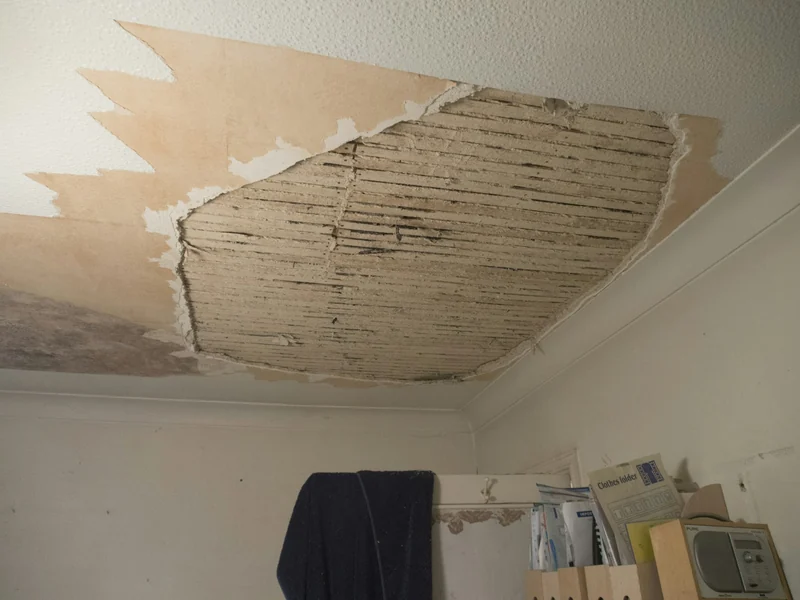
Fixing a sagging board
A sagging board is a warning. It means the board is wet, under-supported or its screws have pulled through. Support it with a prop, find the cause, then re-screw to the frame if the board is sound, or replace it if it is soft. Check the frame spacing and the hangers above. If several boards sag, call a professional.
Peeling paint and mould
Peeling paint and black spots come from moisture. Fix the source, such as condensation or a leak, scrape off loose paint, treat mould with a suitable anti-mould wash, let it dry, prime with a stain-blocking primer and repaint with a mould-resistant paint. In bathrooms and kitchens, add an exhaust fan. For colour choices, see ceiling paint colour.
When to call a professional
- Several boards are sagging or there is a large bulge.
- The ceiling has been wet for a long time or the leak source is unknown.
- Cracks keep returning after repair.
- There is wiring or a heavy fitting above the damaged area.
- You cannot reach the ceiling safely.
Working at height and above wiring carries risk, so use a stable platform and switch off the circuit before you start. If you want a written estimate for the work, our false ceiling cost guide explains typical rates.
How to prevent ceiling problems
Fix leaks promptly, ventilate wet rooms, keep the void above dry, and choose the right material for the room. Use a rigid frame with proper spacing, tape and joint the boards carefully, and leave an access hatch where pipes run above. Repaint every few years to protect the surface. The gypsum false ceiling guide explains the system.
False Ceiling Repair: Frequently Asked Questions
Common causes are movement in the frame, poor jointing, shrinkage of compound or paint, and in plaster ceilings drying too quickly. A single hairline crack is usually cosmetic, while long straight cracks along joints suggest movement. Find the cause before repairing, or the crack will return.
Only after you fix the leak and the area is completely dry. Replace any board that has softened, seal the stain with a stain-blocking primer and repaint. Painting over a damp stain only hides it for a short time before it returns.
A sagging board is usually wet, under-supported or has screws that have pulled through, or the frame spacing is too wide. Prop it up, find the cause and re-screw or replace the board. Several sagging boards need a professional check of the frame and hangers.
Fix the source of moisture, such as a leak or condensation, treat the mould with an anti-mould wash, let the ceiling dry, prime and repaint with a mould-resistant paint. Add an exhaust fan or better ventilation in kitchens and bathrooms to keep it from returning.
Small cosmetic repairs are manageable with a stable platform and basic tools, but work near wiring, large sagging areas or leaks needs a professional. Always switch off the circuit before working near lights and cables, and never stand on an unstable surface.
Send photos of the damage, the room size and what you think caused it on WhatsApp. We suggest the repair, advise whether a whole section needs replacing, and reply with a written rate for the work, so you know the cost before anything is opened up.