Wooden Doors in Pakistan: Solid, Engineered and Veneer Construction
Wooden doors are still the first choice for entrances and formal rooms because they look rich, hold hardware well and can be repaired. They are also the door most affected by moisture, sun and termites, so the construction and the finish matter as much as the timber. This guide explains solid, engineered and veneer construction, the timbers buyers meet, how to protect a wooden door and what to check before you buy. For a single-leaf guide, see single wooden door sizes and designs.
Solid, engineered and veneer construction
The word wood on a quote can mean three different things.
| Construction | What it is | Strengths | Limits |
|---|---|---|---|
| Solid timber | Planks joined into a leaf | Strong, repairable, premium | Heavy, moves with humidity, costs most |
| Engineered wood | Wood or MDF core with a veneer face | Stable, even, better value | Core can swell if soaked |
| Veneer over block board | Thin slices over a block-board core | Light, good looks | Check the core and edges |
| Laminate over wood core | Laminate over a timber or MDF core | Hard-wearing, low upkeep | Less natural feel |
For cost drivers, see door price in Pakistan.
Timbers you will meet
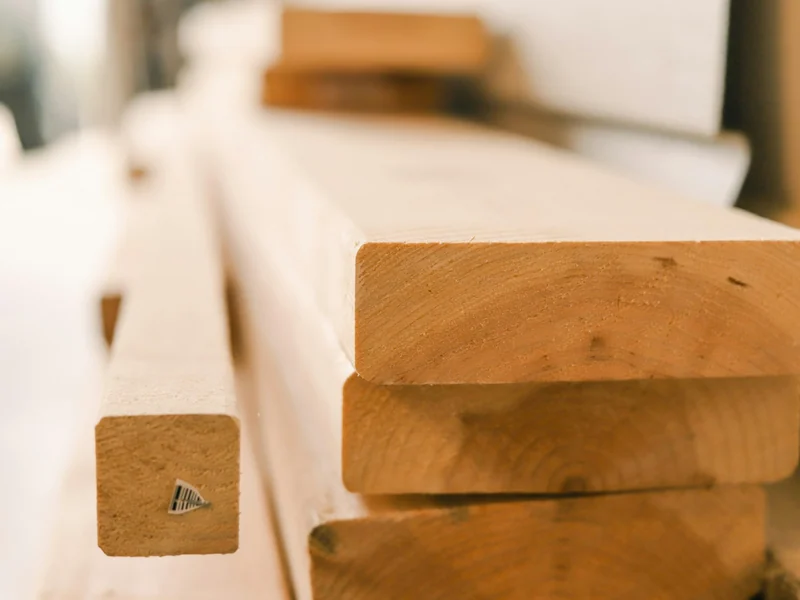
Local timbers such as deodar, kail and sheesham are common, and imported hardwoods such as teak sit at the premium end. Each has a different grain, weight and price. Deodar is valued for stability and natural resistance to decay, and dense hardwoods hold carving and hardware well. Ask for the species in writing, because dealers sometimes use a trade name loosely.
Where wooden doors work best
Use wood where it stays dry and visible: covered entrances, bedrooms, studies and formal lounges, with a sound door frame behind it. Avoid wet bathrooms and open balconies, where moisture and sun shorten its life. For those places, PVC doors are a safer choice, and MDF doors suit dry interior rooms at lower cost.
Protecting a wooden door
Moisture and termites cause most failures. Seal every edge, including the top and bottom, which are the easiest places for water to enter. Use a finish rated for the exposure, and refresh it before it fails. Keep the bottom gap clear of standing water, and treat the frame against termites at installation.

Finishes: polish, veneer and paint
Natural polish shows the grain and needs periodic maintenance. Veneer gives a consistent colour at lower cost. Paint suits engineered leaves and modern interiors. For an entrance that takes direct sun, a laminate or HPL face resists fading better than an untreated natural finish. See door colour ideas for palettes. For carved and lattice panels, see jali designs.
What to check before you buy
- Construction and core, stated in writing.
- Thickness, measured, not only quoted.
- Edge sealing on all four edges.
- Straightness: sight along the leaf for warps.
- Frame match: the leaf must suit the frame and the opening.
Indicative wooden door prices
Wooden door prices vary by timber, build and size. These are indicative ranges for common imported-style types.
| Item | Indicative range |
|---|---|
| American, Malaysian and ash-type wooden doors | About PKR 6,000 - 10,300 per door |
| Wooden door frame, 10 in section | About PKR 790 per running foot |
| Whole-house planning figure, leaf, frame and hardware | About PKR 22,000 per door |
Indicative market ranges.
How we quote
Send the opening size, the room and a photo. We confirm what we can supply and reply with a written rate that lists the door, frame and finish.
| Item | Unit | Scope | Supply | Rate |
|---|---|---|---|---|
| Wooden doors, by timber and construction | Per door | Door only, fitting quoted separately | Supply across Pakistan | Engineered (Ash Palai) PKR 13,800 – 20,800; solid Kail PKR 22,800 – 34,300 per door |
| Frames, hardware and finish | Per set | Door only, fitting quoted separately | Supply across Pakistan | Wooden frame PKR 550 per running ft (PKR 9,350 – 11,000 per door); steel frame PKR 9,000 – 12,500 |
Wooden Doors: Frequently Asked Questions
Dense, stable timbers such as deodar and teak are popular because they hold hardware and resist moisture better, while engineered leaves with an HPL or laminate face resist sun and warping well. The best choice depends on exposure, budget and whether the door stays under cover or faces direct sun.
Solid wood is stronger, repairable and feels premium, but it is heavy and moves with humidity. A well-made engineered door is more stable, often lighter and better value. Choose solid for covered, visible entrances and engineered for rooms where stability and cost matter most.
Treat the frame and the leaf during installation, seal every edge including the top and bottom, and keep the door and frame off wet floors. Check for fine dust or small holes each year. Termite damage starts hidden, so prevention at installation is better than repair.
It is not advisable for a wet bathroom, because constant moisture swells and rots natural wood and untreated MDF. A PVC or fiber door lasts far longer there. If you want a wooden look, use a laminate or veneer finish on a waterproof core.
Room doors are commonly around 35 to 45 mm thick, with entrance doors thicker for strength and sound. Thickness should match the frame and the hardware. Measure the leaf yourself, because stated and actual thickness can differ between suppliers, and ask for the figure in writing.
Send the opening size, the timber or finish you prefer, whether it is an entrance or room door, and a photo on WhatsApp. We confirm what we can supply and reply with a written rate that lists the construction, frame, finish and hardware before you order.
Related Pages
Wooden Door Locks
Mortise sets.
View →Doors
All door types.
View →Single Leaf Doors
Single-leaf sizes and designs.
View →Malaysian Doors
Imported-style hardwood doors.
View →Wooden Door Price Guide
What drives cost.
View →Door Colour Ideas
Finishes and palettes.
View →Wooden Wardrobes
Timber storage.
View →Planning wooden doors?
Send the opening size and a photo. We reply with a written rate.