High Gloss Sheets in Pakistan: Where They Work and Where They Do Not
High gloss sheets give cabinets and walls a deep, reflective finish that makes rooms look brighter and more modern. They are not right for every surface, though, because gloss shows fingerprints, dust and fine scratches that a matt board hides. This page explains how a UV gloss board is made, what to expect in daily use and how to choose between gloss, semi-gloss and matt. It is part of our UV sheets range.
How a high gloss UV board is made
A glossy board starts with a flat core such as MDF or HDHMR. The surface is sanded smooth, coloured or printed, then coated with a UV-curable lacquer. Ultraviolet light cures the coating almost instantly, so it hardens evenly and stays free of dust, which is what gives the mirror-like depth.
The smoother the core and the more even the coating, the better the reflection. A cheap board with a rough core shows ripples in the gloss under side light, so always look at a sheet at an angle.
Gloss, semi-gloss and matt
Gloss level changes how the room feels and how much upkeep it needs.
| Finish | Look | Fingerprints | Best for |
|---|---|---|---|
| Full gloss | Mirror-like, deep | Show easily | Upper cabinets, feature doors, TV walls |
| Semi-gloss | Soft sheen | Show a little | Kitchens, wardrobes |
| Matt or textured | Flat, natural | Hide well | Drawers, children's rooms, daily-use doors |
Not sure which? See the UV sheet design guide for room-by-room suggestions.
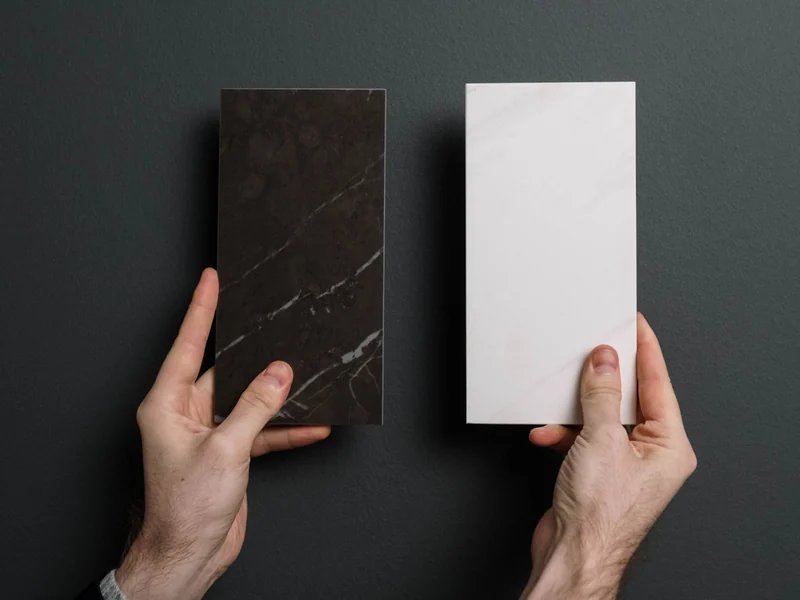
Where high gloss sheets work best
Gloss suits surfaces that are seen more than touched: upper kitchen cabinets, tall wardrobe fronts, TV walls, bar units and reception desks. In a small room the reflection spreads light and makes the space look larger.
In a family kitchen, use gloss on wall units and a semi-gloss or matt finish on base units and drawers, where hands, bags and shoes meet the surface every day.
Cleaning and keeping the shine
Wipe with a clean, soft microfibre cloth and a little mild soap in water, then dry straight away. Avoid abrasive powders, scouring pads and strong solvents, which dull the coating. For fingerprints, a cloth lightly dampened with plain water usually removes them without streaks.
Dust the surface with a dry cloth first, because rubbing dust across gloss is what causes fine scratches over time.
Edge banding and joints on gloss boards
The edge is the weak point of any board. A matching gloss edge band, fitted with hot-melt glue and trimmed cleanly, gives a seamless corner and keeps moisture out of the core. A mismatched or thin band shows as a line and can peel in a humid kitchen.
Ask the carpenter to seal any cut-outs, such as sink and hob openings, before the board is fitted.
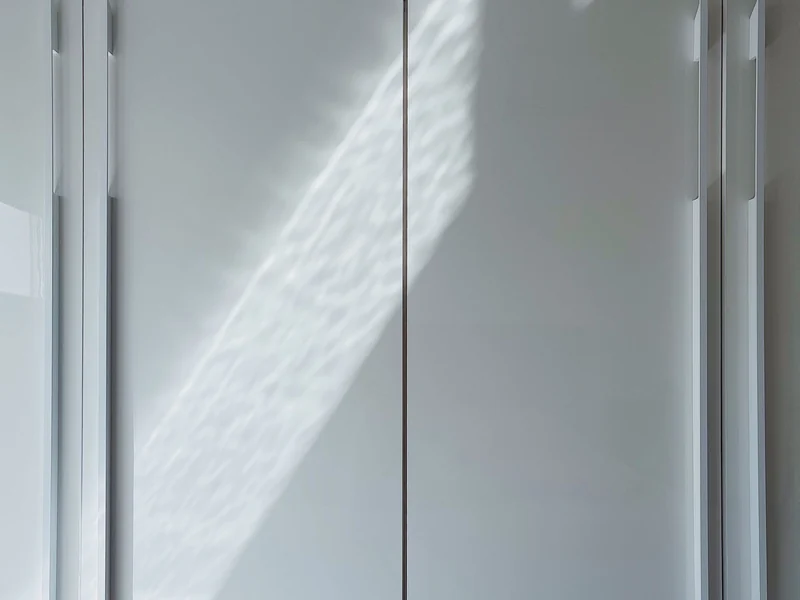
What affects the rate of a high gloss sheet
The rate depends on the core material, the thickness, the coating quality and the colour. Darker and metallic shades usually cost more than plain white, and a thicker board costs more than a thin back panel. Order size changes the rate too, so tell us the quantity.
| Item | Size | Material only or installed | Supply area | Rate |
|---|---|---|---|---|
| Gloss UV board, plain colours | 8 x 4 ft, 18 mm | Material only | Supply across Pakistan | PKR 7,100 – 7,500 / sheet (17mm) |
| Gloss UV board, wood and marble looks | 8 x 4 ft, 18 mm | Material only | Supply across Pakistan | Get today's rate on WhatsApp |
| Matching edge band | Per running foot | Material only | Supply across Pakistan | Get today's rate on WhatsApp |
Compare other board families on our MDF and HPL sheets page and the lamination sheets page.
A quick way to choose
- Mostly looked at: full gloss.
- Touched often: semi-gloss or textured.
- Children or heavy use: matt or laminate.
- Small, dark room: a light gloss to bounce light.
Send a photo of the room on WhatsApp and we will suggest a mix that suits how you use it.
High Gloss Sheets: Frequently Asked Questions
They are boards, usually MDF or HDHMR, coated with a UV-cured lacquer that gives a deep, mirror-like surface. They are used for kitchen cabinets, wardrobes, TV units and feature walls where a modern, reflective look is wanted and the surface is not handled constantly.
Yes. Gloss shows fingerprints, dust and fine scratches more than semi-gloss or matt boards. Keep a soft cloth for wiping, choose gloss for upper doors and use a textured or semi-matt finish for drawers and handles that are touched all day.
They are popular for kitchens because they reflect light and wipe clean. They work best on wall units and tall fronts. Seal every edge and cut-out, keep hot pans away from edges and use a semi-gloss finish on base units for easier daily care.
Dust first with a dry cloth, then wipe with a soft microfibre cloth and mild soapy water, and dry straight away. Never use scouring pads, powders or strong solvents. Rubbing dust across the surface is the main cause of fine scratches, so avoid dry rubbing.
Neither is better everywhere. A gloss board gives a deeper, seamless look but marks more easily. Laminate resists impact and heat better and offers far more pattern choice. Use gloss for display surfaces, and laminate for work surfaces, drawers and any doors that take heavy daily use.
Most gloss cabinet doors and carcasses use 18 mm board, with thinner board for backs and drawer bottoms. Thicker board is used for shelves that carry weight. Tell us the use and the size when you ask for a rate and we will suggest the thickness.
Want a gloss finish quoted?
Send the room, the colour and the quantity. We reply with a written rate.