Crockery Cabinets: Glass Display Units for Dining Rooms and Kitchens
Crockery cabinets show off good plates and glasses while keeping them clean and safe, and it works as furniture as much as storage. Designs range from wall-hung glass units to floor-standing cabinets in dining rooms and built-in display walls in kitchens. This guide covers the types, glass and doors, interior lighting, shelf spacing, materials and how to plan a crockery cabinet that suits both the room and the collection. For everyday storage, see kitchen almari design.
Types of crockery cabinet
Choose by room and by what you display.
| Type | Where | Best for | Note |
|---|---|---|---|
| Wall-hung glass unit | Kitchen or dining wall | Everyday sets | Fix to solid wall |
| Floor-standing display cabinet | Dining room | fine tableware and glassware | Needs floor space |
| Built-in display wall | Kitchen-dining wall | Large collections | Plan with the room |
| Sideboard with glass top | Dining room | Mixed storage and display | Closed storage below |
Glass and doors
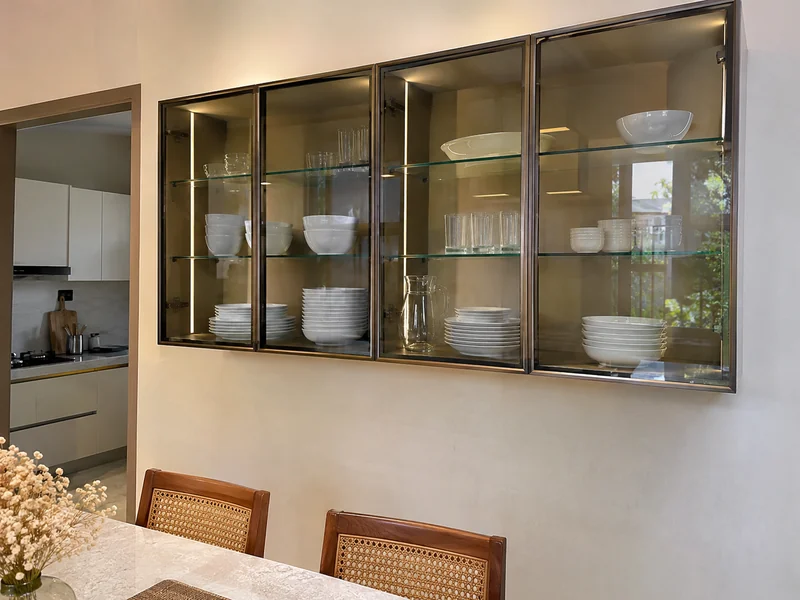
Use toughened glass in framed doors, with clear glass for display, fluted or frosted glass to soften contents and sliding glass to save swing space. Soft-close hinges and gentle catches protect the glass. Avoid heavy glass on weak hinges.
Lighting and shelves
Interior lighting makes a display come alive. Use warm LED strips at the front or top, with glass shelves that let light pass. Space shelves by the items, for example around 10 to 14 in for plates and more for tall glasses, and use plate stands for display.

Materials and finishes
Choose a good board for the carcass, see MDF kitchen cabinets, with a wood-grain or painted finish to match the room. Veneer and solid wood frames suit formal dining rooms. Seal edges and use mirrored backs for depth. Keep the heaviest crockery on lower shelves, and use anti-slip liners so plates stay put when doors close.
Planning the cabinet
- List what you will display and measure the tallest items.
- Choose the wall away from sun and heat.
- Plan the lighting and the socket position.
- Add closed storage below for items you do not display.
Care and safety
Dust glass and shelves regularly, keep heavy items low and fix tall cabinets to the wall to prevent tipping. Keep the cabinet away from the hob and direct sun, which can fade finishes and damage fine items.
How we quote
Send the room size, a sketch or photo and the finish you like. We confirm what we can supply and reply with a written rate that lists every item. Before you order, confirm the exact size or model, ask for the specification and warranty in writing, and compare totals including fitting and delivery rather than the item price alone. To get a close first estimate, clear the area, mark sockets, switches and pipe positions, note the ceiling height and photograph the space from two corners.
| Item | Unit | Scope | Supply | Rate |
|---|---|---|---|---|
| Crockery cabinets, by size and finish | Per cabinet or per sq ft of face | Material and hardware, fitting quoted separately | Supply across Pakistan | Laminate / PVC PKR 1,000 – 2,000 per sq ft of front; UV gloss PKR 1,500 – 2,200; complete 10–12 ft kitchen PKR 150,000 – 350,000 |
| Glass, lighting and fixings | As needed | Material and hardware, fitting quoted separately | Supply across Pakistan | PKR 2,500 – 15,000 per kitchen |
Frequently Asked Questions
A crockery cabinet is a storage unit, usually with glass doors, used to store and display plates, cups and glassware in a dining room or kitchen. It can be wall-hung, floor-standing or built in, and it often includes interior lighting and glass shelves.
Toughened glass is the usual choice for doors and shelves, in clear, frosted or fluted finishes. Clear glass displays items and frosted or fluted glass softens the contents. Ask the supplier to confirm the glass type and thickness, and use soft-close hinges to protect it.
Interior LED lighting makes a display look much better and helps you find items. Use warm LED strips, with glass shelves so the light passes through. Plan the socket and the switch position early, and keep wires neat inside the cabinet. Measure carefully and confirm sizes with the supplier before ordering.
A common guide is around 10 to 14 in for plates and bowls and more for tall glasses and jugs, depending on what you display. Adjustable shelves give flexibility. Measure your tallest items before you plan the shelf positions.
Yes, a glass-fronted run in a kitchen-dining wall works well, as long as it is away from the hob, steam and direct sun. Fix it to solid wall or build it into the carcass run, and plan the lighting with the rest of the kitchen.
Send the room size, a photo or sketch and the finish you prefer on WhatsApp. We confirm what we can supply and reply with a written rate that lists the boards, hardware and fittings, so you can compare quotes from different suppliers on the same scope.
Planning a crockery cabinet?
Send the room size and a photo. We reply with a written rate.