Wood Flooring in Pakistan: Solid, Engineered and Laminate Compared
Wood flooring brings warmth and a natural look that no other floor quite matches, but the word covers very different products with different strengths. This guide explains the main types of wood flooring, how Pakistan's heat and humidity affect them, how each is fitted and cared for, and which one suits which room. For prices, go to wooden flooring price, and for the wider range of floors see our flooring range.
The main types of wood flooring
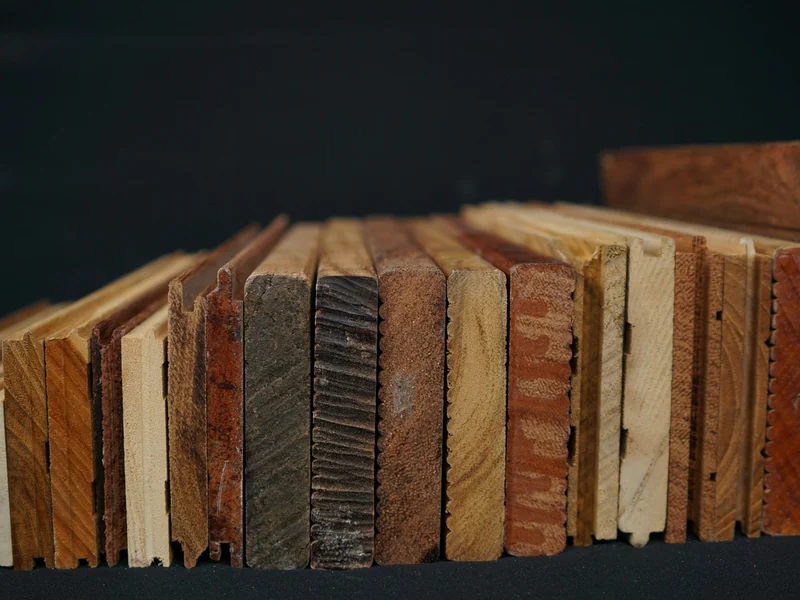
Four products are sold as wood flooring. They look similar in a photo and behave quite differently in a room.
| Type | What it is | Strength | Limit |
|---|---|---|---|
| Solid wood | A plank cut from one piece of timber | Can be sanded and refinished many times | Moves with humidity; not for wet rooms |
| Engineered wood | A real wood top layer over a plywood or HDF core | More stable, suits heat and humidity | Top layer limits refinishing |
| Laminate | A photographic layer on an HDF core | Economical, scratch resistant | Cannot be refinished; water-sensitive |
| Bamboo | Compressed bamboo strips | Hard, sustainable look | Quality varies widely |
See the full comparison with vinyl in vinyl vs laminate vs wooden flooring.
How Pakistan's climate affects wood
Wood absorbs and releases moisture, so it expands in humid weather and shrinks in dry heat. In Pakistan, with hot dry summers and humid monsoons, this movement is the main reason a floor develops gaps or cupping. Engineered wood and laminate are more stable than solid wood, which is why they are popular in apartments and coastal cities.
Whatever you choose, let the planks acclimatise in the room before fitting, leave an expansion gap at the walls and control humidity where you can.
Which rooms suit wood
Wood suits bedrooms, living rooms, studies and dry offices. Avoid it in bathrooms, kitchens near the sink and any room that floods, where vinyl or tile is safer. Ground-floor rooms over a slab need a moisture check before any wood goes down, and a barrier layer if the slab is damp.
How wood flooring is fitted
There are three main methods. Glue-down bonds the plank to the subfloor and gives a solid feel. Nail-down fixes planks to a timber or plywood base. Floating click systems lock planks together over an underlay without fixing to the base, and are the quickest. The right method depends on the product and the subfloor, and the maker's instructions decide it. For local supply, see wooden flooring in Lahore.

Finishes: oil, lacquer and UV
The surface finish decides upkeep. Oiled floors look natural and can be spot repaired, but need re-oiling. Lacquered or UV-cured finishes are harder and easier to clean, but a deep scratch is harder to repair invisibly. Matt and satin finishes hide dust and marks better than high gloss.
Cleaning and care
Sweep or vacuum regularly and mop with a barely damp cloth and a cleaner made for wood. Never flood a wood floor. Wipe spills at once, fit felt pads under furniture, and protect the floor from direct strong sun, which can fade it. Keep indoor humidity steady for best results.
Choosing between the types
- Longest life and refinishing: solid wood in a dry, stable room.
- Real wood with better stability: engineered wood.
- Tight budget and a wood look: laminate.
- Wet areas: choose PVC vinyl flooring instead of any wood.
What changes the price
Species, thickness, finish, brand and the construction decide the rate. Laminate is the lowest, engineered wood is in the middle and solid hardwood is the highest, with fitting extra. Our published ranges are on the wooden flooring price page. For wood-look tiles instead of planks, see wooden floor tiles.
Wood Flooring: Frequently Asked Questions
Engineered wood is often the best choice because it gives a real wood surface with better stability in heat and humidity. Solid wood suits dry, stable rooms and lasts longest because it can be refinished. Laminate is the budget option. Match the product to the room and the climate.
Solid wood can be sanded and refinished many times and lasts for decades, but it moves more with humidity. Engineered wood is more stable and suits apartments and coastal cities, but its real wood layer limits refinishing. For most homes, engineered wood is the safer choice.
It is not recommended near sinks, showers or any room that can flood, because water damages and warps wood. Use vinyl or tile in wet areas. In a dry kitchen area, a sealed engineered or laminate floor may work with careful spill control.
Yes, with the right product and care. Engineered wood and laminate cope better than solid wood. Let the planks acclimatise, leave an expansion gap, check the slab for moisture and keep indoor humidity as steady as you can. Avoid fitting wood over a damp slab.
Sweep or vacuum often, mop with a barely damp cloth and a cleaner made for wood, and wipe spills quickly. Fit felt pads under furniture, protect the floor from strong direct sun and never flood it. Re-oil an oiled floor when it looks dry.
Often yes for floating click floors, if the tiles are firm and the surface is flat and dry. Deep grout lines may need filling first. Glue-down and nail-down floors need a different base. Ask for a site check, since the subfloor decides the method.
Measure the area in square feet and add about 10 per cent for cuts and waste, more for diagonal or herringbone layouts. A 12 x 14 ft room is 168 sq ft, so order about 185 sq ft. Buy all boxes for the room together so the shade matches.
Send the room size, a photo and the type you prefer on WhatsApp. We reply with a written rate showing the flooring, the underlay, trims and fitting if you want it, so you can compare quotes from different suppliers on the same scope.
Planning a wood floor?
Send the room size and a photo. We suggest a product and quote it.