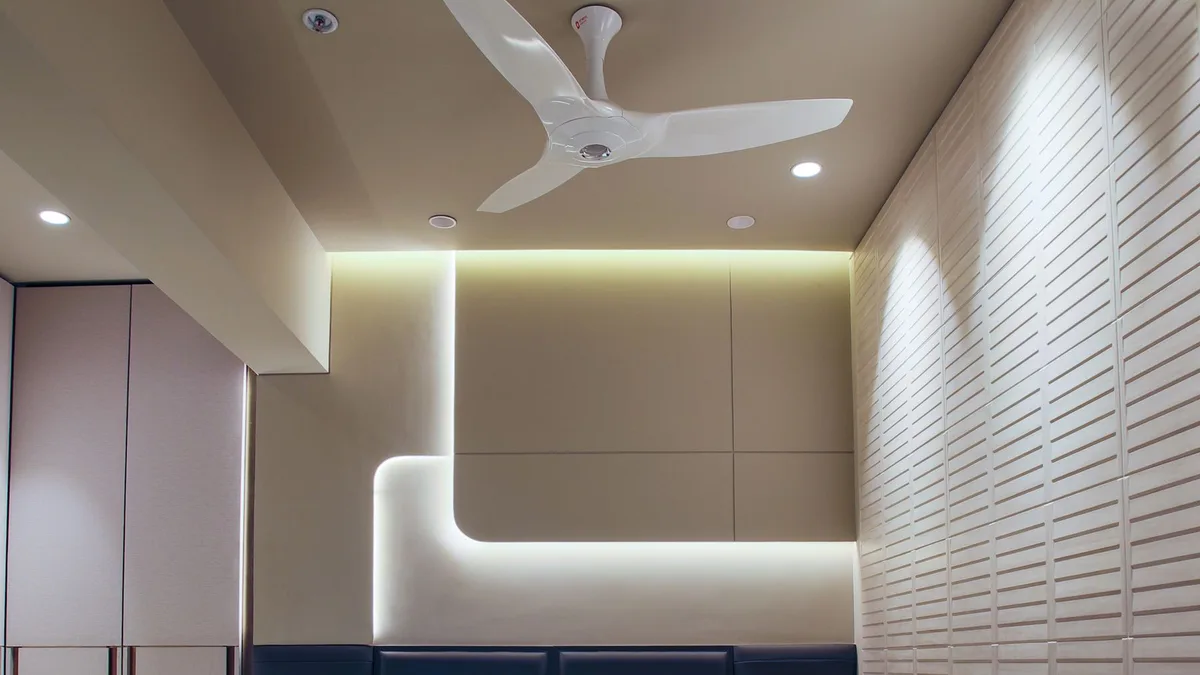
What makes a fan energy saving
An energy saving fan gives good airflow for low power. The main factor is the motor: a brushless motor with an electronic controller uses far less power than a plain induction motor. Good blade design and bearings add to the saving. The label watts at high speed is the quickest check.
Types that save energy
- BLDC or inverter fans. About 28 to 35 watts for a 56 inch fan.
- AC DC fans. The same motors, with battery or solar input.
- Energy-saving AC fans. Better induction designs at about 50 to 60 watts.
- Plain AC fans. 70 to 90 watts, the baseline.
How to pick on the numbers
Compare watts at the same size and speed, and look for an airflow figure in CFM if given. Divide CFM by watts for efficiency, as in ceiling fan energy consumption. Prefer a fan with a motor warranty of at least two years and a controller warranty.
| Class | Typical power |
|---|---|
| Plain AC, 56 inch | 70 - 90 W |
| Energy-saving AC, 56 inch | 50 - 60 W |
| BLDC or AC DC, 56 inch | 28 - 35 W |
| Small DC fan | 12 - 25 W |
Prices move with brand, model, size and stock. Use these ranges to judge a quote, then compare the exact model and what is included.
How much you can save
A BLDC fan saves about 13 units a month compared with a plain fan used 10 hours a day. In a house with six fans that is about 78 units a month. At slab rates that can be a large part of the fan bill. See power consumption for the sums.
Payback
If a BLDC fan costs PKR 4,000 to 8,000 more than a plain fan and saves PKR 400 to 600 a month, it pays back within about 8 to 16 months in a house where it runs all summer. In rarely used rooms, payback is longer. Replace the busiest fans first.
Solar and battery fit
Energy saving fans suit solar and battery systems best, because the lower draw stretches battery hours. Pair them with a DC breaker and see solar ceiling fan price for system sizing.
Brand notes
Many makers sell energy saving models. Our neutral pages on Khurshid, Indus, Super Asia and how to compare brands use the same checks.
What to check before buying
- Real watts. Read the label on the fan.
- Motor and controller warranty. Ask for both.
- Remote. Test every key.
- Voltage range. Wide range suits weak supply.
- Spares. Ask where to buy a controller.
Fitting
Do not wire a regulator to an energy saving BLDC fan. Hang it from a hook in the slab and protect the circuit with an MCB. Fixed wiring should be done by a licensed electrician.
Frequently Asked Questions
Brushless AC DC fans, using about 28 to 35 watts for a 56 inch fan, save the most. Energy-saving AC fans at 50 to 60 watts save less, and plain AC fans at 70 to 90 watts are the baseline. Ask for the specification in writing so you can compare quotes on the same basis.
A BLDC fan saves about 13 units a month against a plain fan used 10 hours a day. With six fans that is about 78 units a month, which is meaningful at slab rates. Check the warranty terms and who honours them before you pay.
In a house where fans run all summer, the extra cost of PKR 4,000 to 8,000 is often recovered in 8 to 16 months. In rarely used rooms it takes longer. Measure carefully and confirm sizes with the seller before ordering. Rates and stock change, so confirm the current position before you commit.
Yes. The lower draw stretches battery hours and reduces the panel and battery you need. Match the DC voltage and use a DC breaker. Rates and stock change, so confirm the current position before you commit. If you are unsure, send a photo and the measurements and we will advise.
Read the watts on the label on the fan itself at high speed, and compare with fans of the same size. A plug-in energy meter can confirm it. If you are unsure, send a photo and the measurements and we will advise.
Send the quantity, the size or rating and a photo of the space. We reply with a written rate that names the model and the warranty, and lists what is and is not included, so the comparison with other sellers is fair.